
HOLLISTER, Fla. — Journey has spent more than half her life waiting for someone to notice her.
The 9-year-old boxer/pit bull mix arrived at S.A.F.E. Pet Rescue’s sanctuary in Hollister in December 2021 as an emaciated stray so thin that staff weren’t sure she would survive.
Nearly five years later, she’s still waiting for someone to take her home.
I asked S.A.F.E. if I could take Journey out for the day, hoping it might answer a question that had lingered for years: Why was she still there?
No one had ever taken her out of the shelter simply to spend the day with her. The morning I arrived to pick her up, rain washed out plans for parks and trails, so we started instead at a dog-friendly coffee shop in downtown St. Augustine.
The café offered the first glimpse of Journey in an ordinary setting.
She paid little attention to the bustle around her. The sounds of the café came and went unnoticed — but people never did.
I turned away for only a moment to grab my coffee, and when I looked back, half a dozen customers had gathered around Journey. One after another, strangers crouched beside her, reaching down to pet her before continuing on with their morning.
For a few minutes, Journey was simply another dog at a neighborhood coffee shop.
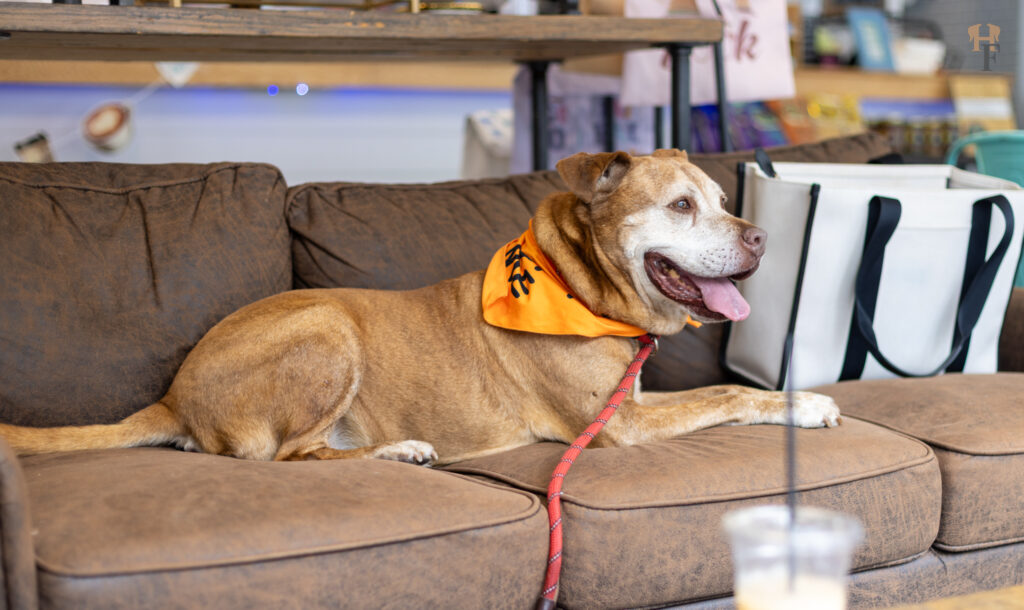
Each time someone walked by, she hobbled over to say hello before returning to her spot beside me, greeting each person with a wagging tail and a gentle bunny hop that lifts her front paws from the floor.
When someone accidentally dropped a coffee mug onto the floor, she barely flinched. Every time the bell above the front door chimed, though, she was on her feet, tail wagging, waiting to greet whoever walked inside.
Nothing about her suggested she’d spent nearly five years in a shelter, which only made the obvious question harder to answer: Why was she still there?
Pam Johns, manager of S.A.F.E’s Hollister location, doesn’t believe Journey has been overlooked because of her temperament.
“In six years, I have never heard her growl. And she’s never snapped at anybody,” Johns said. “So that’s a good baby.”
The challenge, she said, is getting people to meet her in the first place.
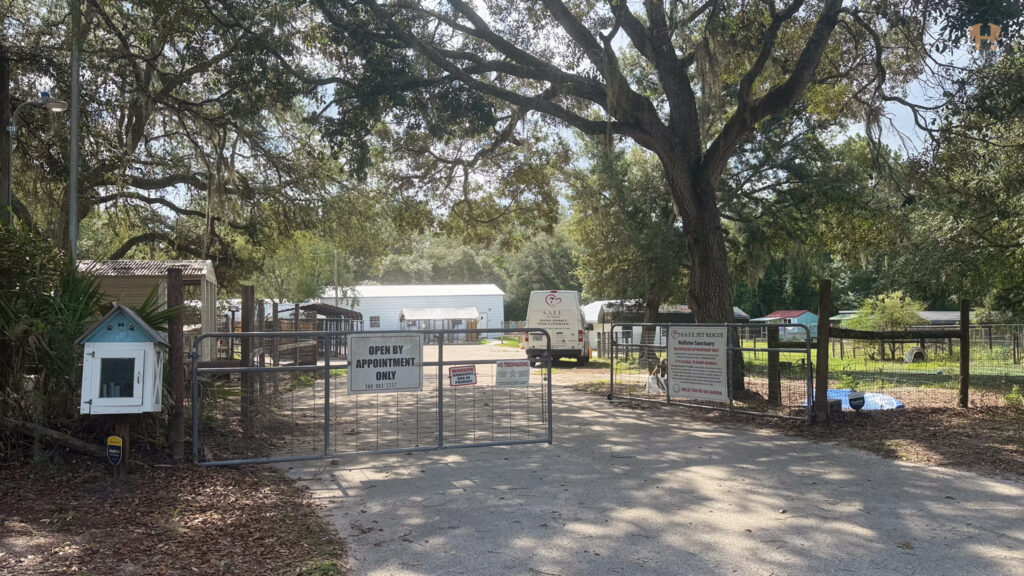
Journey spends her days at the sanctuary, set back from a dirt road in unincorporated Putnam County, where it’s largely invisible to passersby.
“You don’t have people just driving by saying, ‘Let’s stop and look at a dog,'” Johns said. “It just doesn’t happen.”
Founded in 2008, the Hollister location serves as the organization’s long-term housing facility for dogs that are aggressive or otherwise difficult to place. Open by appointment only, it sees relatively little foot traffic. Most adoptions instead happen through S.A.F.E.’s St. Augustine shelter or at off-site events, Johns said.
Journey rarely leaves the property except for veterinary appointments, and in nearly five years at S.A.F.E., she has never received a single adoption inquiry, application, or meet-and-greet.
Keeping Journey in Hollister, however, was a deliberate choice. Staff moved her there because the quieter setting and greater distance from other dogs helped reduce her stress, Johns said. The busier St. Augustine shelter attracts far more adopters, but ultimately proved overwhelming for her.
Journey’s extended stay at S.A.F.E. reflects the organization’s long-term, no-kill model, where dogs can remain for years while waiting for adoption. As dogs nationwide spend longer in shelters — particularly larger dogs — maintaining that approach has become more difficult. Many shelters and rescues are struggling to balance space for incoming animals with the needs of dogs already in their care.
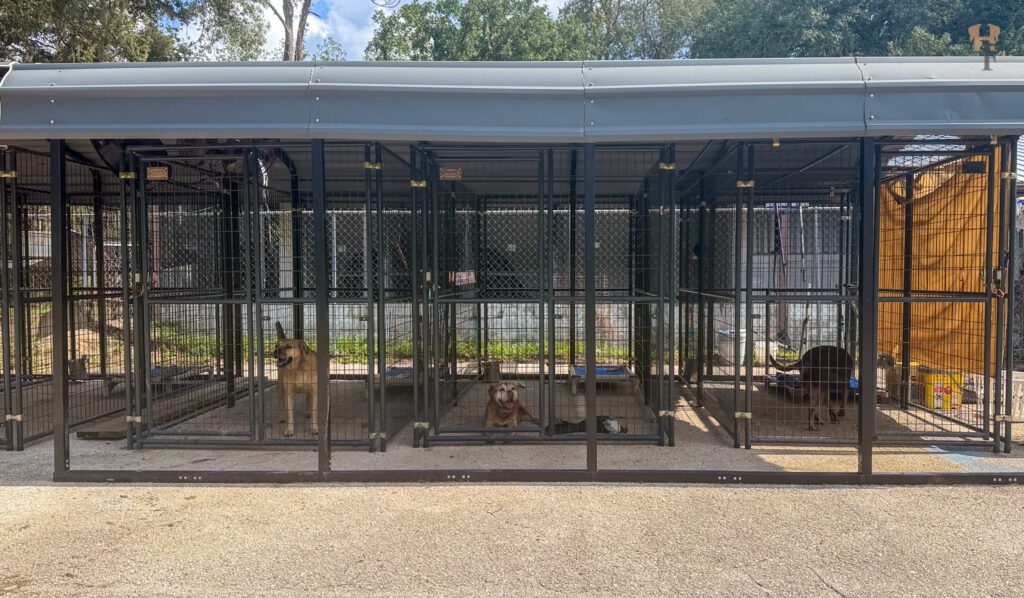
Staff know what kind of adopter Journey needs. She could live with a family, a couple or a single owner, they said — but she must be the only pet in the household.
Finding a home where Journey would be the only pet has proved difficult, reflecting broader adoption trends. Research has consistently found that senior dogs and those with behavioral restrictions tend to wait longer for adoption than other shelter dogs.
Since she arrived at S.A.F.E. in 2021, hundreds of other dogs have come and gone. Journey is still there.
“With Journey, I just think we have to stay open to a miracle,” Johns said. “Whatever miracle comes, that’s the one we just grab.”
Meri Pope, a volunteer at S.A.F.E., has another theory about why Journey keeps getting overlooked.
Journey isn’t a puppy, and she doesn’t have the kind of distinctive look that immediately catches someone’s attention, Pope said. In a shelter full of dogs competing for someone’s eye, she can blend into the background.
“We love her because we know what a sweet girl she is,” Pope said. “But she’s, I guess, sort of commonplace in looks and she doesn’t stand out maybe in that department.”
What sets Journey apart, she said, isn’t immediately visible from the outside of a kennel. The first thing most people see is the gray on her face.
At 9, she’s reached an age when many shelter dogs are passed over, despite still likely having years ahead of her and already being the kind of dog many people are looking for.
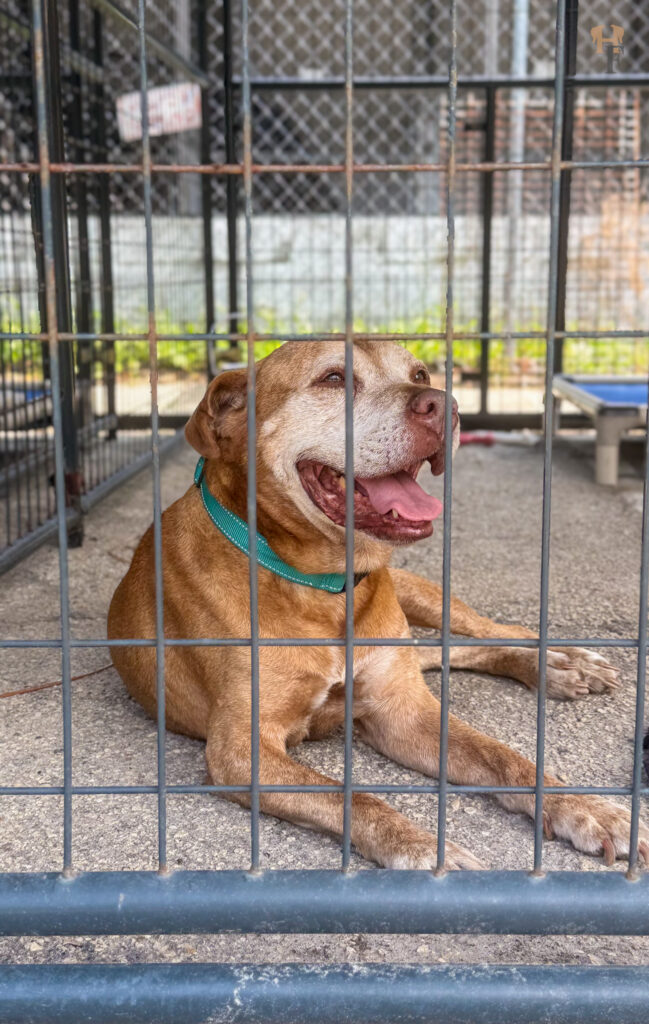
Volunteer Emily Millard has known Journey for nearly all of her time at S.A.F.E.
No one knows what Journey’s life looked like before she arrived at S.A.F.E., but over the years, Millard has come to believe she once lived in a home, pointing to the ease with which Journey settles into unfamiliar places.
“She’s just very easy to take care of,” Millard said. “She’s not any trouble at all. She’s a very go-with-the-flow kind of dog.”
But the Journey Millard first met was nothing like the one greeting strangers over coffee.
Journey arrived at S.A.F.E. on Dec. 20, 2021, after a woman found her wandering the streets as a stray and brought her to the shelter.
She was little more than skin and bone, and Millard wasn’t sure she would survive her first few days.
In those early months, Journey barked constantly at the neighboring kennels. Staff said one neighboring dog eventually reached through the kennel gate during one of those encounters, severely injuring her front leg and leaving her hospitalized for a month.
Millard has since watched that restless dog grow older and quieter. These days, her life follows a predictable rhythm: breakfast, time in the play yard, a walk with a volunteer — sometimes two, if she’s lucky — dinner, then back to her kennel.
Our next stop was a nearby pet store.
Journey ambled through the aisles, more interested in greeting people than sniffing the shelves. While we were there, a mother and daughter told me they had adopted two dogs from S.A.F.E.’s St. Augustine shelter.
When they learned Journey had spent nearly five years waiting for a home, they returned a few minutes later with toys and treats for her.
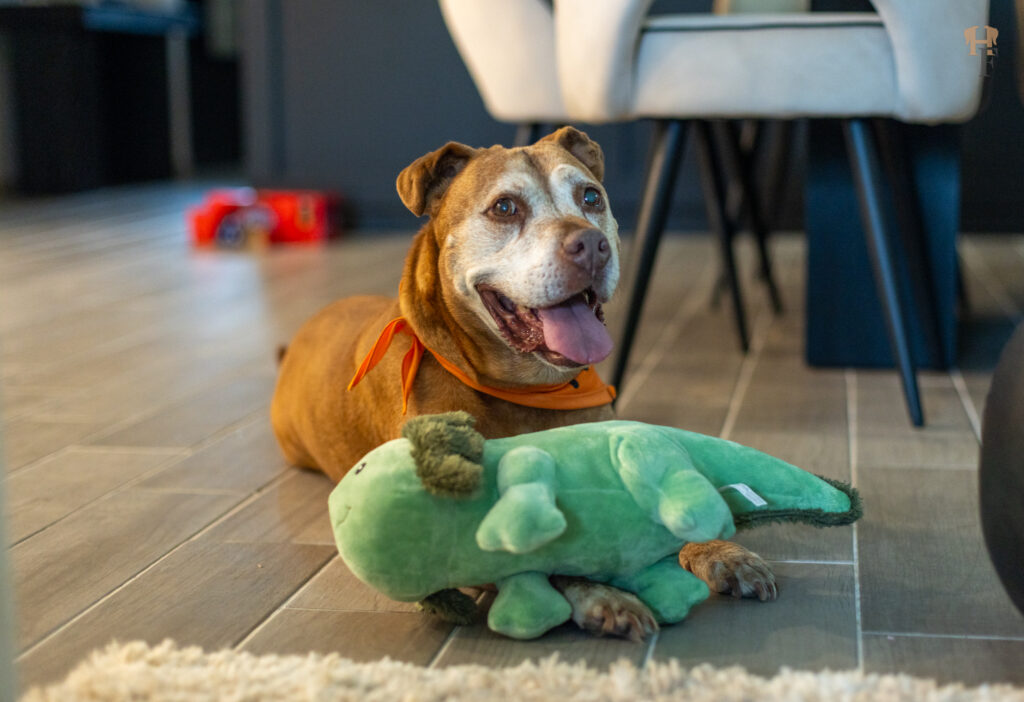
Journey rode to my house with her new toys beside her in the back seat, and it didn’t take long for them to end up scattered across my living room floor. A plush green axolotl was the one she settled down with.
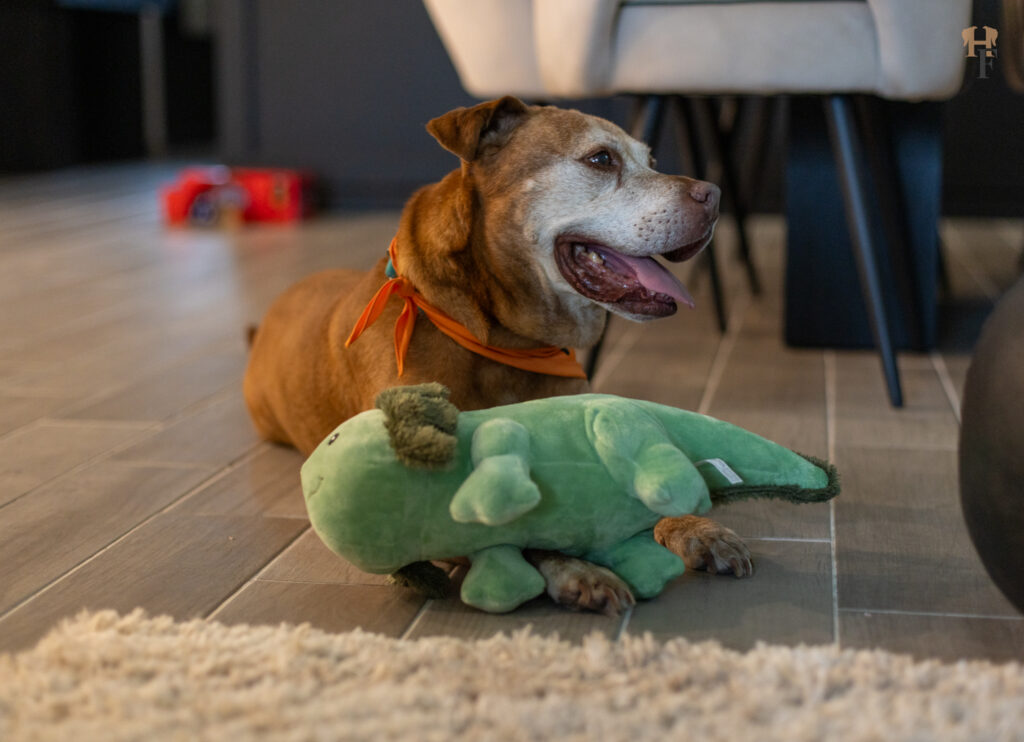
She wandered through the house at an unhurried pace, stopping briefly to sniff a room before moving on. Whenever I got up, she quietly followed, settling back down wherever I happened to be.
The sound of the refrigerator door opening or a crinkling bag was enough to bring her hobbling over, where she’d sit patiently to see if there might be something for her, too. None of it seemed unfamiliar to her.
A couple of hours later, it was time to head back to the shelter.
On the drive back to Hollister, Journey spent the first few miles standing in the back seat with her head resting on the window ledge, watching the farms and pastures pass by. Eventually, she curled up and fell asleep.
When we pulled into the shelter, Journey didn’t climb out of the car the way she had that morning. She lingered in the back seat while Johns clipped on her leash, then eased herself down onto the gravel.
As Johns led her toward the play yard, Journey looked back more than once before disappearing through the gate.
I set out that morning with a simple question: Why had Journey spent nearly five years in a shelter?
By the end of the day, I wasn’t any closer to an answer.