CLAY COUNTY, Fla. — Dog owners in Clay County are being warned to keep their pets away from Duck Creek after local health officials detected harmful blue-green algae toxins in the water this week.
The advisory was issued after a water sample collected from the creek on May 20 tested positive for the algae, according to the Florida Department of Health in Clay County. Officials said the public should “exercise caution in and around Duck Creek,” which empties into the southwest section of Doctor’s Lake.
The advisory urges residents and visitors not to swim, wade or otherise come into contact with the water. Officials also warned residents not to drink the water or participate in activities such as water skiing.
The department specifically advised residents to keep pets and livestock away from the water.
What symptoms should dog owners watch for?
According to veterinary and public health guidance, dogs exposed to harmful blue-green algae toxins may show symptoms including:
- vomiting
- diarrhea
- leathargy
- weakness or sumbling
- seizures
- difficulty breathing
Pet owners should contact a veterinarian immediately if a dog becomes sick after possible exposure to contaminated water.
Blue-green algae, also known as cyanobacteria, can produce toxins that may be harmful to both people and animals. Dogs are considered especially vulnerable because they are more likely to drink contaminated water and may ingest toxins by licking algae from their fur after swimming, per guidance from the Centers for Disease Control and Prevention.
According to the department’s website, exposure to blue-green algae toxins can cause serious illness in both humans and animals. Symptoms in dogs can include vomiting, diarrhea, weakness, difficulty breathing, stumbling, seizures and, in severe cases, death.
Officials also recommended washing skin and clothing after water contact and warned that contaminated water should not be used for cooking or cleaning because boiling does not remove the toxins.
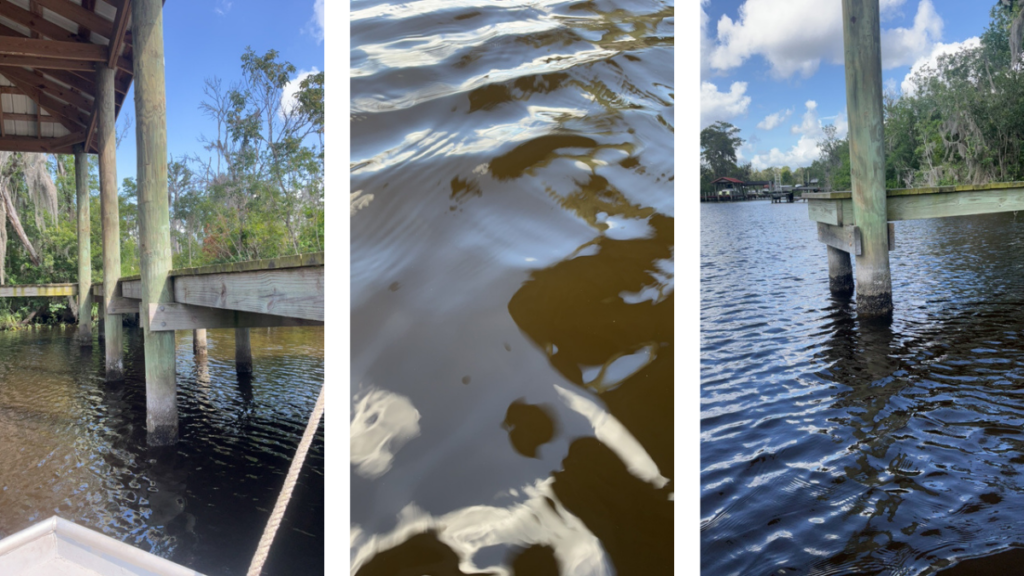
Blue-green algae blooms are common in Florida during periods of warm temperatures, sunlight and slow-moving water. Photos posted by the Florida Department of Environmental Protection from the sampling sites showed water that appeared only mildly discolored in some areas, underscoring how harmful algae toxins are not always accompanied by the thick, bright-green blooms many people expect to see.
The advisory remains in effect until further notice. DOH-Clay said updates will be shared as additional results become available.
Residents can report suspected algae blooms to the Florida Department of Environmental Protection online or by calling 855-305-3903.