

A new Florida law that will increase penalties for animal cruelty offenses and allow cities and counties to impose steeper fines for animal control violations takes effect Thursday.
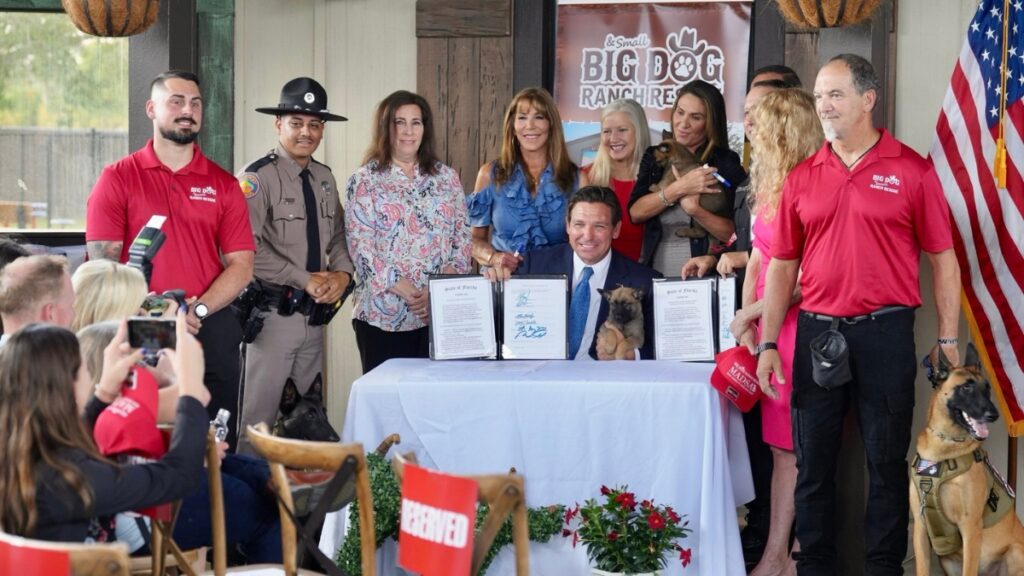
House Bill 559, signed by Gov. Ron DeSantis on May 12, is the only animal-related law among a dozen new Florida statutes taking effect Oct. 1.
Here’s what’s changing:
Higher penalties for animal control violations
The most immediate change for dog owners is a higher cap on the civil penalties cities and counties can issue for violating local animal control or cruelty ordinances — including leash laws and other violations, not just cruelty complaints. Starting Thursday, that cap rises from $500 to $2,500 for a first offense, $5,000 for a second offense and $7,500 for a third or subsequent offense.
The law does not automatically raise fines across the state, but rather raises the ceilings on what local governments are allowed to charge for animal-related violations.
New felony targets adults who involve kids in cruelty
HB 559 also creates a new third-degree felony for an adult who entices a minor to commit — or commits in a minor’s presence — aggravated animal cruelty, animal fighting or baiting, or sexual abuse of an animal.
If a minor is adjudicated on an animal cruelty offense, they’ll be required to undergo a psychological evaluation, and any counseling the court orders. Parents or guardians will be responsible for any treatment, unless a court finds they are unable to afford it.
DIG DEEPER: FLORIDA’S OTHER NEW ANIMAL LAWS FROM THIS YEAR

Harsher sentencing guidelines for animal fighting
Separately, the law increases how the state’s existing animal fighting or baiting charge is scored under Florida’s sentencing guidelines — meaning prison time could be more likely for those who are convicted.
While the maximum five-year penalty itself has not increased, what will change is how how many points an animal-fighting conviction adds to a defendant’s scoresheet. The charge now moves from a Level 1 to a Level 5 offense on the state’s severity chart. The new offenses involving minors rank even higher: Level 6 for animal cruelty and animal fighting, and Level 7 for sexual abuse of an animal.
New minimum listing times for the animal abuser registry
The law also sets new rules for Florida’s animal abuse database, which the Florida Department of Law Enforcement has maintained since Dexter’s Law took effect in 2025.
Starting today, entries on the registry on FDLE’s website must be posted for at least three years after a first misdemeanor conviction, five years after a first felony conviction and 10 years after a subsequent one. People whose convictions are later overturned or sealed can petition to have their information removed.


