
A bill aimed at strengthening Florida’s animal cruelty laws — including expanding a statewide database of offenders and creating new penalties for committing animal cruelty in front of children — cleared the Senate unanimously and is now headed to Gov. Ron DeSantis’ desk for signature.
HB 559, which passed the Senate in a 37-0 vote Wednesday, would introduce several new provisions governing animal cruelty offenses. If passed, it would make certain aggravated animal cruelty crimes, such as engaging in animal fighting or baiting or making sexual contact with an animal, a third-degree felony when committed in the presence of a minor. The same penalties would also apply to anyone who tries to lure or entice a child to commit those crimes.
Penalties tied to animal cruelty convictions would also increase under the bill. Under current Florida law, most animal cruelty offenses are charged as first-degree misdemeanors, while aggravated animal cruelty — such as intentionally causing an animal’s death or severe suffering — is a third-degree felony punishable by up to five years in prison.
In addition to criminal penalties, animal cruelty convictions can also carry civil fines of $500. HB 559 would raise those fines to $2,500 for a first offense, $5,000 for a second offense, and up to $7,500 for each subsequent conviction.
The bill would also require the Florida Department of Law Enforcement to expand its statewide animal cruelty database to include information on convicted animal abusers, including their name, date of birth, case number, description of charges, mugshot and other identifying information. The database allows shelters, rescues and local governments to identify individuals convicted of animal cruelty.
Rep. Linda Chaney, R-St. Pete Beach, who sponsored the bill with Sen. Kristen Arrington, D-Kissimmee, told Florida Politics in a statement that the bill aims to “further protect animals in our communities.”
“The bill redirects juveniles onto a path of improved mental health and breaks the cycle of animal abuse, strengthens tools for shelters and rescues to keep animals out of the hands of known abusers, and empowers local governments to stop animal cruelty in their communities. People who abuse animals are five times more likely to harm people.”
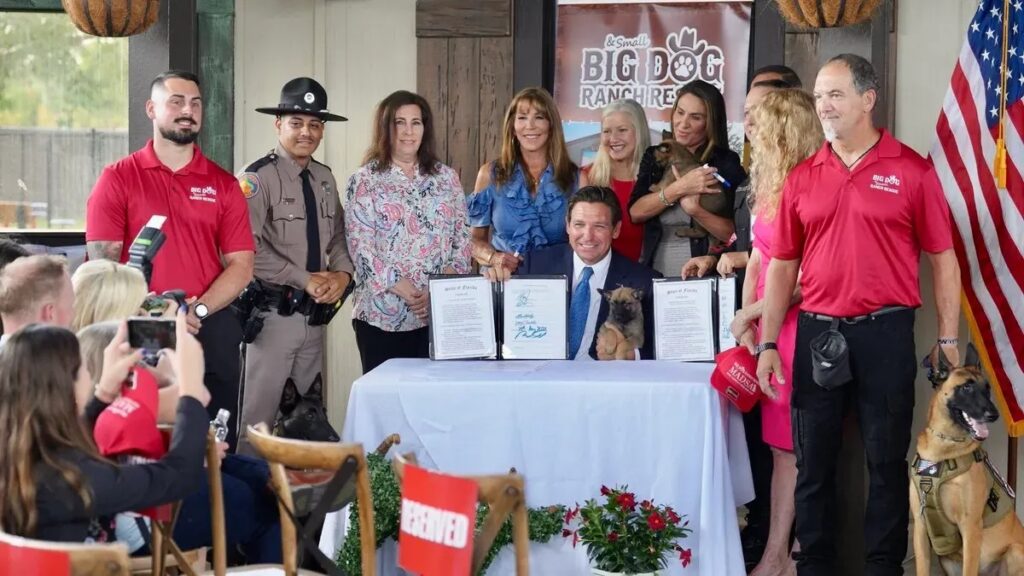
HB 559 builds on HB 255, also known as Dexter’s Law, which established Florida’s animal cruelty database and introduced a 1.25 sentence multiplier for aggravated animal cruelty convictions. The earlier measure was also sponsored by Chaney.
Since going live Jan. 1, 2026, the database has recorded more than 2,100 offenders, according to data from FDLE.
“Protecting children means protecting them from every form of violence, including the trauma of witnessing animal cruelty,” Arrington said in a statement to Florida Politics.
“For too long, there has been a gap in our statutes when abusers weaponize cruelty in front of a child or force them to participate. CS/HB 559 ensures the proper tools are in place to hold offenders fully accountable,” she said.
If signed into law, HB 559 would go into effect Oct. 1.