
On any given day, the phones at pet poison hotlines ring with a familiar story.
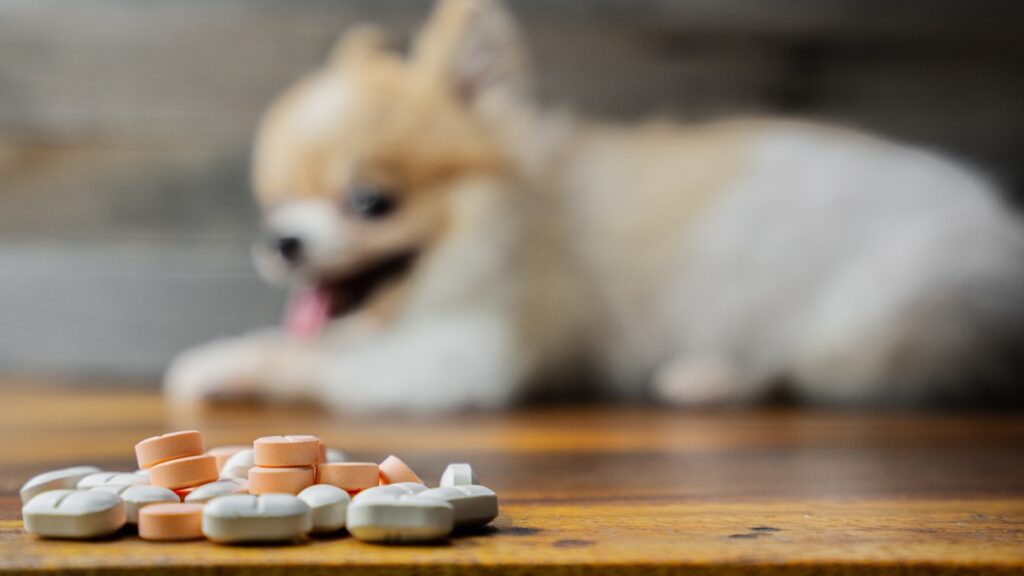
A dog got into a bottle of painkillers. A puppy chewed through a blister pack of pills. A dropped tablet vanished before its owner could grab it.
Individually, these moments are often attributed to the everyday mishaps of pet ownership. But taken together, they reveal one of the most consistent trends in pet poisoning cases: dogs accidentally ingesting medications — an issue toxicologists are highlighting ahead of National Poison Prevention Week, which begins Sunday.
That pattern has drawn increased attention from poison control experts, who say many of the substances that pose the greatest risk to dogs are the same medications found in everyday household medicine cabinets.
According to ASPCA Poison Control, over-the-counter medications remained the top toxin in 2025, accounting for nearly 17% of the more than 376,000 exposure calls received by the hotline. The category has held the top spot for eight consecutive years.
Human prescription medications also ranked among the leading hazards, making up about 15% of reported exposures.
Many of those cases involve drugs commonly found in household medicine cabinets, including cardiac medications, epilepsy drugs and antidepressants, according to the ASPCA.
Recreational drugs — including marijuana and psychedelic mushrooms — accounted for about 1.9% of toxin exposures reported to the hotline in 2025, according to the organization.
And the trend appears across poison control data nationwide.
Pet Poison Helpline, which fields calls from pet owners and veterinarians across North America, also reported medications among the toxins pets encountered most often in 2025.
Over-the-counter medications and supplements were among the top 10 reasons for calls, accounting for nearly 27% of total calls — the second most common reason pet owners contacted the helpline, just behind food exposures – according to data provided to HomeFetch by Pet Poison Helpline.
In the organization’s latest report, acetaminophen, the active ingredient in Tylenol, ranked No. 10 on the list of the most common toxins affecting dogs, while ibuprofen, the active ingredient in Advil and Motrin, ranked No. 6. ASPCA data showed ibuprofen was also the most common over-the-counter medication involved in calls to its poison control hotline.
“Because it’s more common, you’re going to find it in more households,” said Dr. Tina Wismer, senior director of toxicology at ASPCA Poison Control. “And with over-the-counter medication, many times people don’t think of these as being potentially dangerous. I mean, I can go to Walmart or Walgreens and just pick a bottle off the shelf.”
That accessibility, Wismer said, can leave pet owners with a false sense of security, assuming that over-the-counter medications and supplements are less dangerous than prescription drugs.
These drugs sit on bathroom counters, nightstands and kitchen shelves, and inside purses and backpacks. Dogs, meanwhile, are opportunistic eaters with a powerful sense of smell and little hesitation about swallowing anything that looks or smells interesting.
Sometimes, the exposure is as simple as a dropped pill, said Dr. Renee Schmid, a senior veterinary toxicologist and director of Veterinary Medicine at Pet Poison Helpline. In other cases, dogs chew through pill bottles or blister packs. Some medications are also flavored or coated, making them even more attractive to animals.
“There are so many exposures [to] medications and reasons,” said Schmid. “[Pet owners] had someone come visit, and they left their suitcase on the floor, and they left their medications in a baggie in the suitcase. Or they sat the medications on their nightstand and they walked away, and the pet ingested it.”
Even small amounts of widely used medications can pose serious health risks depending on the drug involved and the size of the dog, she said. A single 500 mg tablet of acetaminophen could pose serious issues to a 12- to 20-pound dog, because human medications are metabolized differently in animals.
Symptoms of medication poisoning in dogs can vary widely, toxicologists say, but may include vomiting, lethargy, tremors, difficulty walking, seizures or changes in heart rate. In severe cases, exposure can lead to kidney damage, liver injury or other life-threatening complications.
Florida appears to see a particularly high number of medication-related cases compared with national trends..
In 2025, ASPCA poison control staff reported 12,524 cases across the state involving potential toxin exposures, according to data shared with HomeFetch. Those incidents involved 16,774 animals – 14,862 of them dogs.
Of those cases, 2,629 involved human prescription medications, accounting for about 21% of exposures, higher than the national average of 14.6%.
Experts say Florida’s demographics may partly explain the difference, noting that a larger retiree population can mean more prescription medications present in the home.
Veterinarians say prevention often comes down to simple habits: keeping medications stored securely, making sure pill bottles are tightly closed and immediately retrieving any tablets that fall on the floor.
“Preventing something’s way cheaper than having to treat it,” Wismer said. “It’s training not only your family members not to leave the brownies on the table, not to leave their backpack on the floor, but also any visitors that come to your house.”
Dog owners are also advised never to give human medications unless instructed by a veterinarian.
If a dog is suspected of ingesting medication, experts say owners should contact a veterinarian or an animal poison control hotline as soon as possible rather than waiting for symptoms to appear.
“Taking the wait-and-see approach can be fatal,” Schmid said. “A lot of times, the most common symptom is no symptom at all.”
If you suspect your dog has ingested a potentially toxic substance, contact a veterinarian immediately or call the ASPCA Animal Poison Control Center (888-426-4435) or Pet Poison Helpline (855-764-7661).